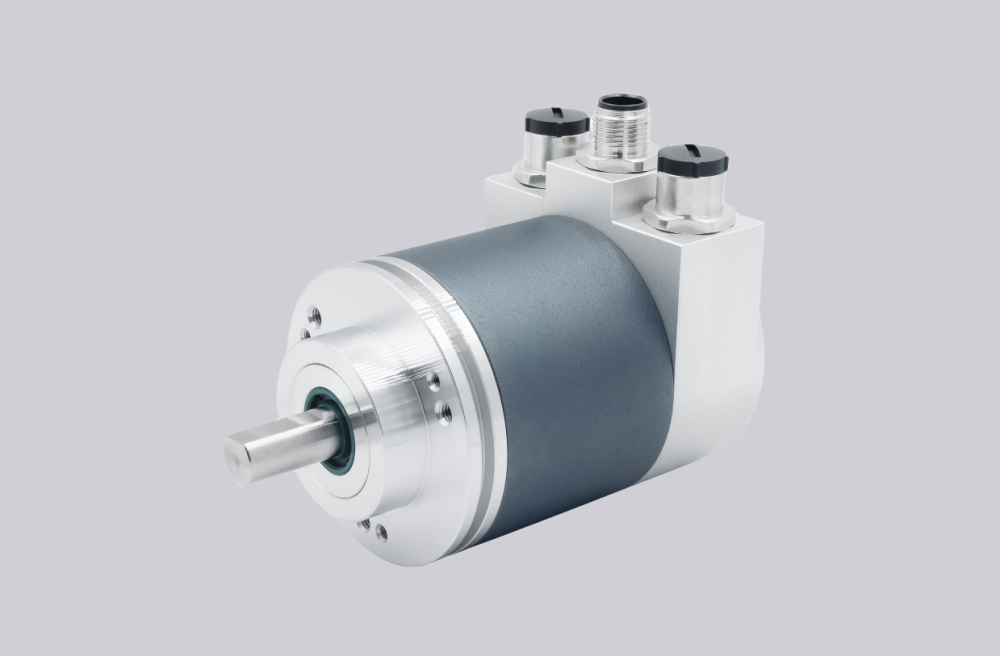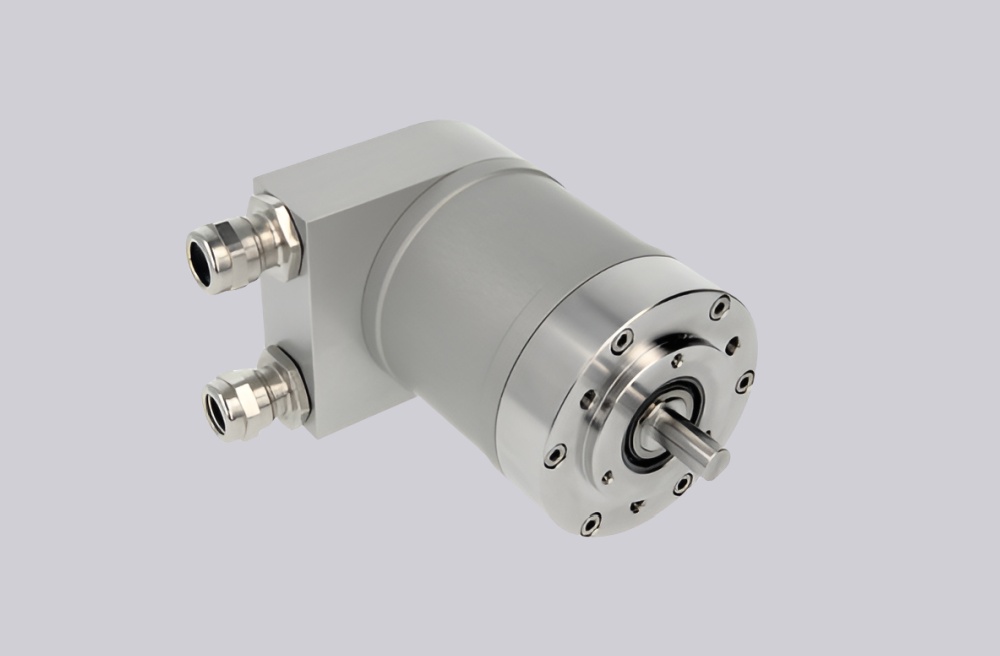





An SSI encoder is an absolute position feedback device that transmits position data through a Synchronous Serial Interface (SSI). In industrial automation, it is commonly used in machines where the controller must read the actual shaft position directly and reliably, especially after power-up or an unexpected shutdown. Unlike an incremental encoder, which sends pulses and requires the control system to calculate relative movement, an SSI encoder provides a defined digital position value. This is why SSI encoders are widely used in equipment that demands stable position continuity, reduced restart time, and dependable motion control.
In practical terms, an SSI encoder is often selected when a machine cannot afford position uncertainty after a power interruption. In many industrial systems, losing the real shaft position means the machine must return to a reference point, perform a homing routine, or go through additional safety checks before restarting. An SSI absolute encoder helps avoid this problem by allowing the controller to read the actual position value immediately. For engineers working on lifting systems, indexing mechanisms, servo axes, or retrofit projects, this feature is usually one of the biggest reasons for choosing SSI instead of a basic incremental feedback solution.
To understand how an SSI encoder works, it is useful to separate two parts of the system: position detection and data transmission. Inside the encoder, the shaft position is measured by an internal sensing method, typically optical or magnetic depending on the model design. That physical position is converted into a digital absolute code. The encoder does not continuously stream data on its own. Instead, it waits for the controller to request the position information. This is where the SSI protocol becomes important.
In an SSI system, the controller is the master and the encoder is the slave. The controller sends a clock signal to the encoder, and the encoder responds by outputting position data one bit at a time in sync with that clock. In most SSI applications, there are two main signal lines: a clock line from the controller to the encoder, and a data line from the encoder back to the controller. Every clock pulse shifts out the next data bit until the full position word has been transmitted. Once the data word is complete, the controller interprets the returned value and uses it for monitoring, synchronization, correction, or closed-loop control.
This structure is one of the reasons SSI has remained relevant in industrial automation for so long. The protocol is straightforward, predictable, and well suited to applications where the controller only needs reliable absolute position feedback without the added complexity of a larger communication network. In many machines, SSI is chosen not because it is the newest interface, but because it is stable, proven, and easy to integrate when the control architecture already supports clocked serial position input.
The term SSI encoder is most often associated with absolute encoders, and for good reason. SSI is designed to transfer a complete position word rather than pulse-based relative movement. That means each shaft position corresponds to a unique digital value. If power is lost and then restored, the system can still read the real position without rebuilding it from motion history. In actual machine operation, this can improve startup efficiency, reduce unnecessary repositioning, and simplify control logic. In vertical motion systems, hoists, rotary indexing tables, and material handling equipment, this characteristic can also help improve operational safety because the system does not need to rely on guessed or reconstructed position.
However, one common misunderstanding is that SSI itself defines the encoder’s sensing quality or performance level. In reality, SSI mainly describes the communication method, not the complete encoder capability. Two SSI encoders may use different sensing principles, have different accuracy levels, offer different resolutions, and be built for completely different industrial environments. One model may be intended for clean, controlled automation equipment, while another may be designed for dusty, oily, vibration-heavy applications. For this reason, engineers do not evaluate an SSI encoder only by its interface name. They also check resolution, mechanical format, environmental protection, supply voltage, bit structure, and controller compatibility.
Another frequent misunderstanding is assuming that all SSI encoders are interchangeable as long as the label says “SSI.” In real projects, this assumption causes many avoidable replacement problems. Mechanical installation may look acceptable at first, but the new encoder may still fail to work properly because the controller expects a different bit length, timing behavior, singleturn/multiturn structure, or data arrangement. In retrofit work, it is very common for the actual mismatch to come from data structure, clock requirements, or controller interpretation, not from the fact that both devices use SSI communication. This is why experienced engineers verify both electrical and logical compatibility before approving a replacement.
From an application perspective, SSI encoders are widely used in systems such as packaging machines, conveyor systems, automated assembly equipment, lifting devices, servo positioning axes, machine tools, printing equipment, and other automation systems that require repeatable position feedback. In these environments, the controller must know the shaft position precisely enough to coordinate motion, synchronize sequences, prevent cumulative position errors, or maintain repeatable stopping accuracy. The reason SSI remains popular is not simply tradition. It is because many industrial systems still benefit from a direct, robust, and relatively uncomplicated method of reading absolute position data.
In real installations, signal stability depends on more than the encoder itself. Wiring, shielding, grounding, cable length, and controller parameter settings all affect whether SSI communication remains stable in operation. In long cable runs or electrically noisy environments, signal problems are often caused by poor installation practice rather than encoder failure. For example, unstable data may be related to weak shielding, improper grounding paths, interference from inverter cables, or incorrect controller-side timing configuration. This is one reason why a theoretically compatible SSI encoder may still behave poorly if the actual installation conditions are not reviewed carefully.
When engineers select or replace an SSI encoder, they usually pay special attention to a few critical points: whether the application needs singleturn or multiturn feedback, whether the resolution matches the control requirement, whether the controller can interpret the data correctly, whether the shaft and flange dimensions match the machine, and whether the encoder can survive the real operating environment. In practical maintenance and retrofit work, overlooking one of these points often leads to more trouble than choosing the wrong interface family.
A useful way to think about SSI is this: it is not just a communication label, but a practical solution for applications where direct absolute position feedback is more important than interface complexity. If the machine needs dependable position information immediately after power-up, and the control system is designed for serial clocked data reading, an SSI encoder is often a very effective choice.
In summary, an SSI encoder is an absolute position feedback device that uses synchronous serial communication to send a complete position value from the encoder to the controller. Its main strength lies in providing direct, repeatable, and stable position information without relying on pulse counting to recover shaft position. This makes it particularly valuable in industrial automation systems where position continuity, startup efficiency, and control reliability matter.
For engineering users, the real value of understanding SSI is not just knowing the definition. It is understanding where SSI performs well, why it is still used in modern industrial systems, and what must be checked to make sure the encoder will work reliably in the actual machine. Once these points are clear, SSI becomes much easier to apply correctly in both new installations and replacement projects.