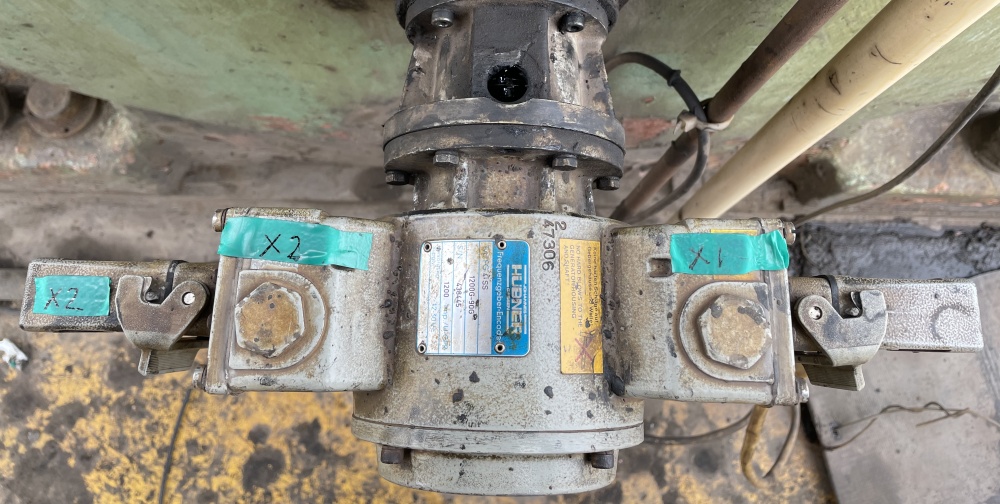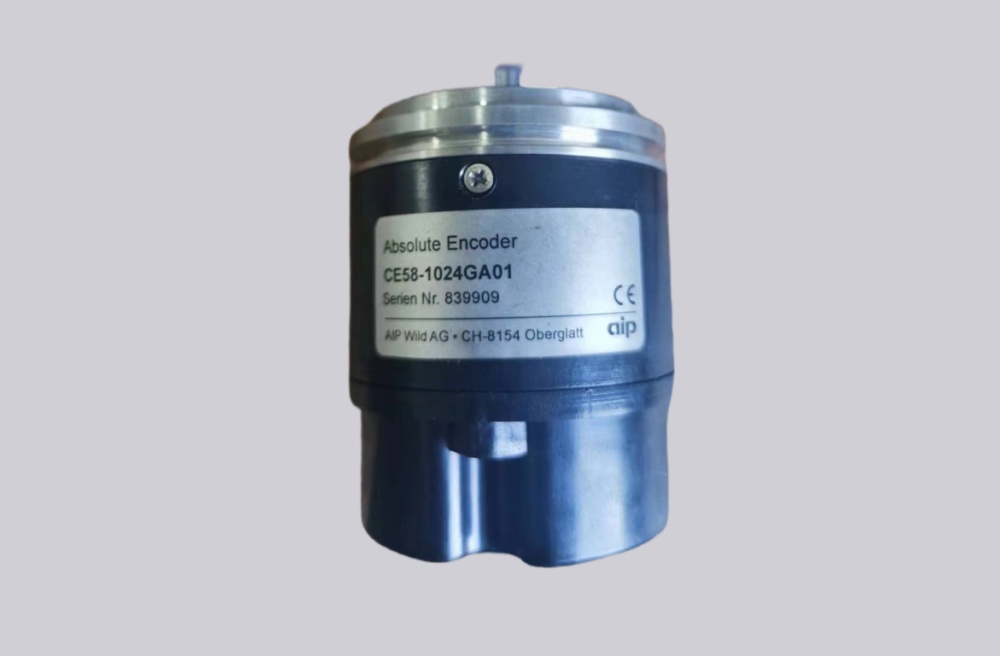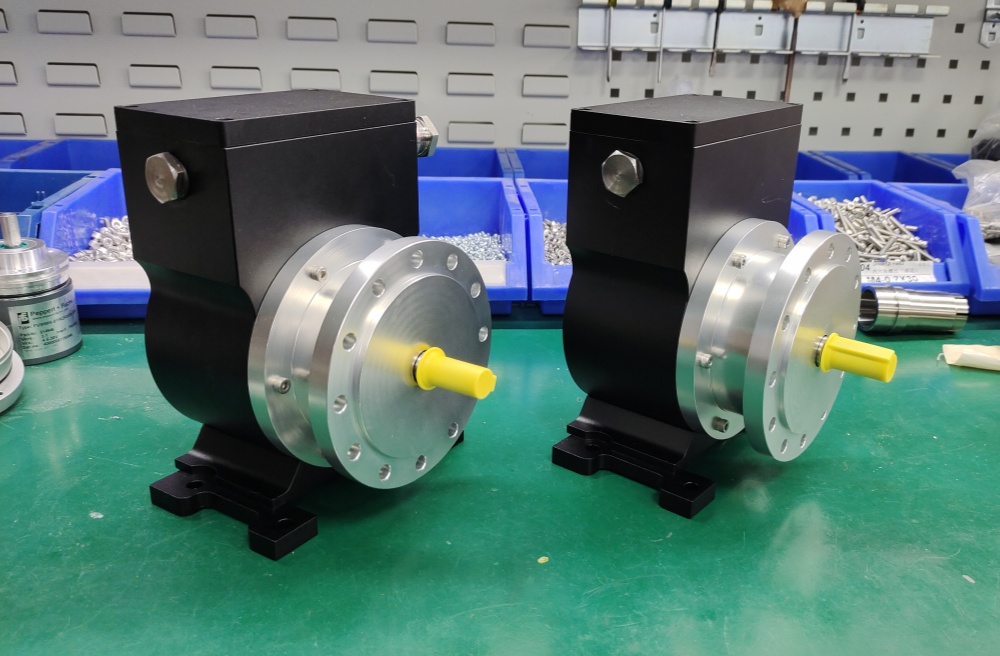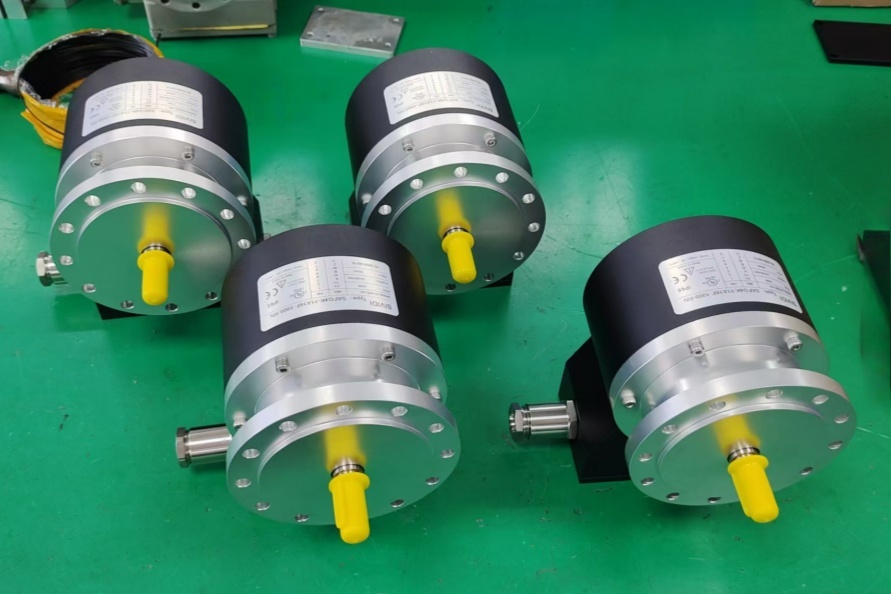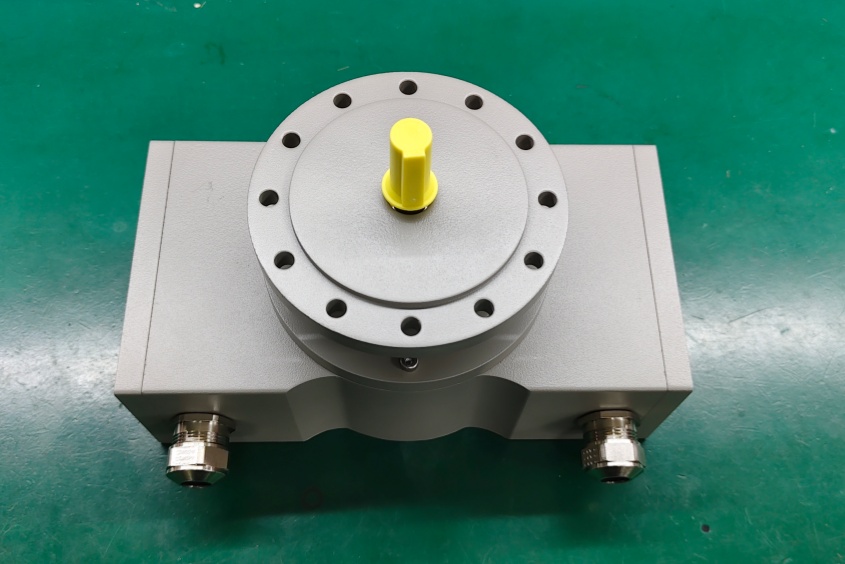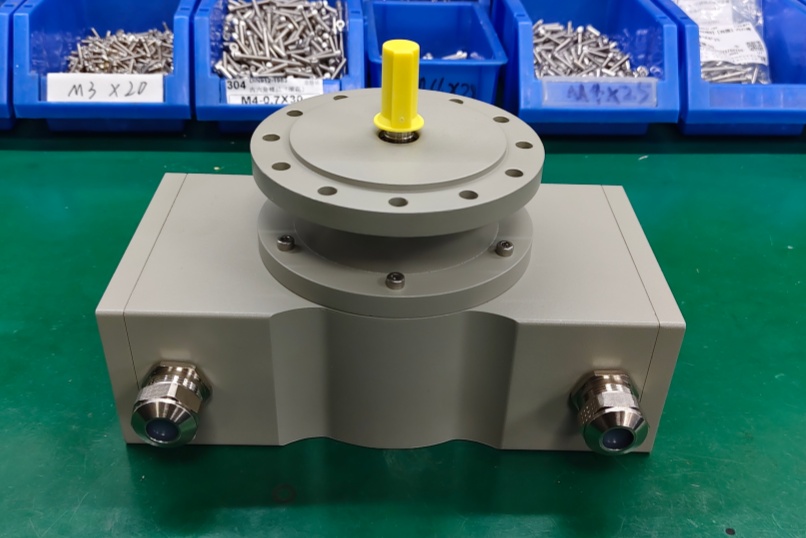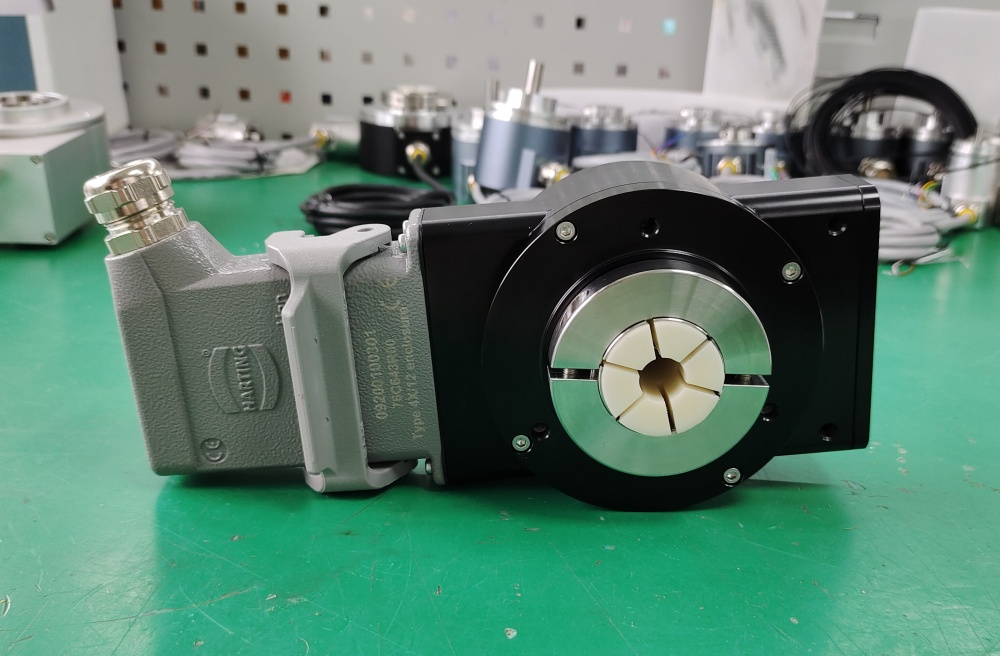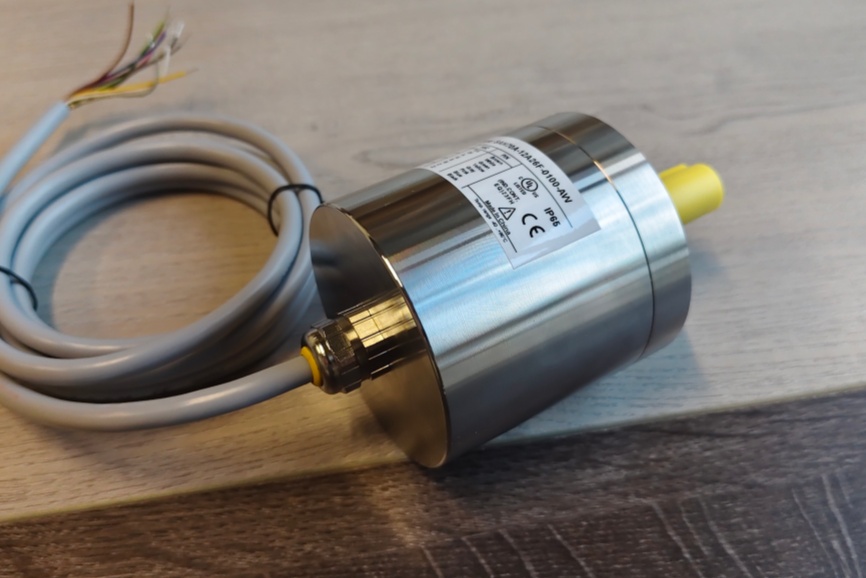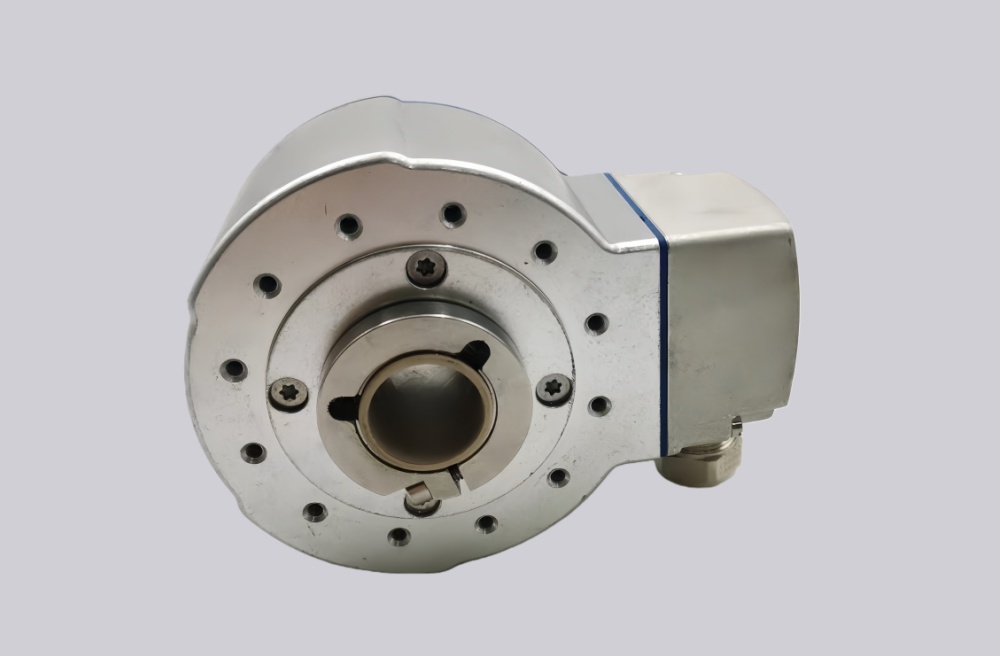




For systems using the M6C-5S1XH51-T003, a custom compatible encoder solution can be engineered for maintenance support, retrofit execution, replacement planning, and upgrade work. Where the installed machine uses an explosion-protected hollow-shaft encoder in a hazardous gas area, the compatible version can be developed around the original mechanical fit, signal structure, and field connection concept, with a typical production lead time of 30 working days.
Technical Overview of the M6C-5S1XH51-T003 Encoder
The M6C-5S1XH51-T003 belongs to the M6C explosion-protected hollow-shaft incremental encoder family for hazardous industrial environments. This series is designed for CAT 2 (Zone 1) use and carries the marking II 2 G Ex de IIB T4 Gb, with IP66 enclosure protection and magnetoresistive sensing technology. Within the family structure, M6C-5 identifies the 1 1/8-inch hollow-shaft version, which distinguishes it mechanically from the smaller M6C-4 configuration. The platform supports one or two electrically independent isolated outputs and provides incremental square-wave signals through A, A-, B, B-, Z, Z- channel arrangements.
For this batch of models, the pulse count is to be treated as 1024 ppr. The M6C series supports extended resolution structures and output frequencies from 0 to 250 kHz, which makes it suitable for industrial feedback applications that combine hazardous-area requirements with higher signal-performance demands. This specific model also includes a coded 003 modification, and the M6C coding table defines 003 as the torque arm version. That makes the mounting concept a key part of the model identity rather than a secondary accessory detail.
Industrial Integration Considerations
For this version, the main mechanical integration point is the 1 1/8-inch bore together with the anti-rotation arrangement required for hazardous-duty service. The M6C installation guidance makes clear that the encoder must not be rigidly mounted and should be installed using the hollow-shaft, clamping-collar, and anti-rotation bracket concept intended by the design. The standard flexible anti-rotation bracket can tolerate ±0.1 inch shaft end float, and shaft runout should be checked before the replacement is finalized. Since this model carries the 003 torque-arm modification, the geometry and movement allowance of the torque arm should be reviewed as part of the retrofit plan.
Electrical installation in a Zone 1 area also requires careful review. The enclosure wiring concept, conduit-entry arrangement, grounding points, and cable suitability for ambient temperature must all be confirmed before production. The manual also states that the cover must not be opened while energized in a hazardous area, and any unused openings must be closed using certified blanking devices. These are not minor documentation points; they directly affect whether the replacement remains aligned with the original explosion-protection logic in the field.
Custom Compatible Encoder Solution
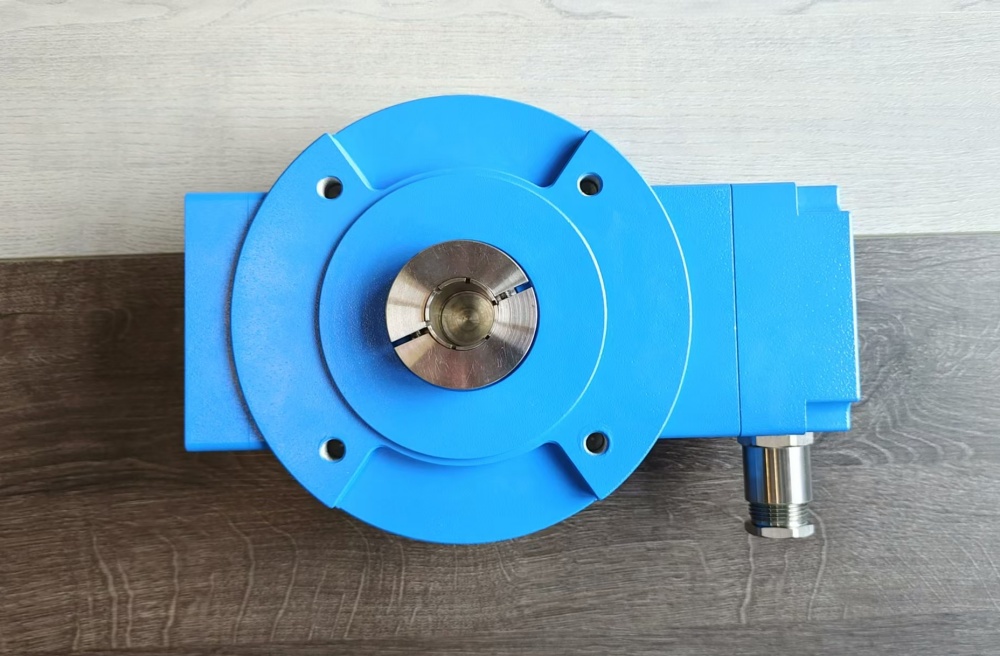
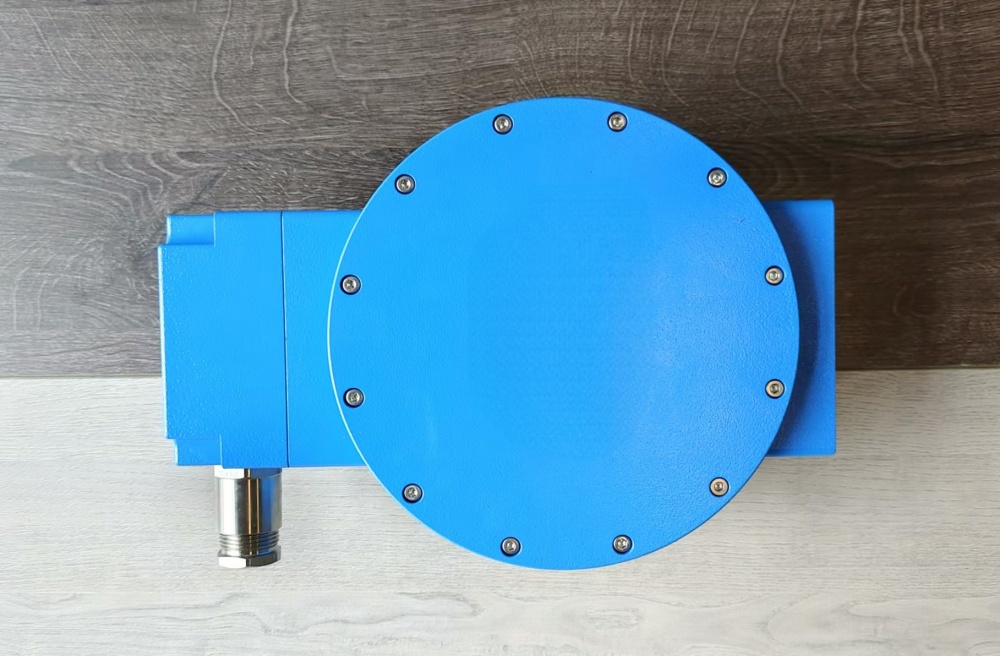
For the M6C-5S1XH51-T003, a custom compatible encoder solution can be configured to match the original hazardous-area installation concept as closely as possible. The compatible version can be aligned with the required 1 1/8-inch bore, 1024 ppr output, output arrangement, marker logic, connection method, torque-arm structure, and explosion-protection level so that machine modification remains limited during replacement.
This is especially valuable where the encoder is already installed in a hazardous-duty drive section and where changes to mounting geometry, wiring hardware, or enclosure practice would increase service risk. In those cases, the objective is to preserve shaft-side fit, signal continuity, and hazardous-location suitability together, rather than treat the encoder as only a dimensional spare part.
Custom Solution Photos
Lead Time and Custom Development
Typical production lead time: 30 working days.
Before production, the engineering review should confirm the shaft size, pulse requirement, torque-arm modification, output arrangement, marker configuration, connection style, hazardous-area installation conditions, grounding method, and controller input expectations. The complete coded structure should be checked against the installed unit so the compatible solution can remain consistent with the actual field configuration.
Typical Technical Parameters
| Parameter | Specification |
|---|---|
| Encoder Type | Explosion-protected incremental hollow-shaft encoder |
| Resolution | 1024 ppr |
| Series | M6C-5 |
| Hazardous Area Classification | CAT 2 (Zone 1) |
| Explosion Protection Marking | II 2 G Ex de IIB T4 Gb |
| Sensing Principle | Magnetoresistive |
| Shaft Type | Hollow shaft |
| Shaft Diameter | 1 1/8 inch |
| Output Channels | A, A-, B, B-, Z, Z- |
| Signal Type | Incremental square wave |
| Output Frequency | 0 to 250 kHz |
| Output Arrangement | One or two isolated outputs, depending on configuration |
| Modification Code | 003 = torque arm |
| Protection Rating | IP66 |
| Max Speed | Up to 5000 RPM |
| Operating Temperature | -20 °C to +80 °C, or -40 °C to +80 °C with modification code 001 or 005 |
| Application Orientation | Maintenance, retrofit, replacement, upgrade |