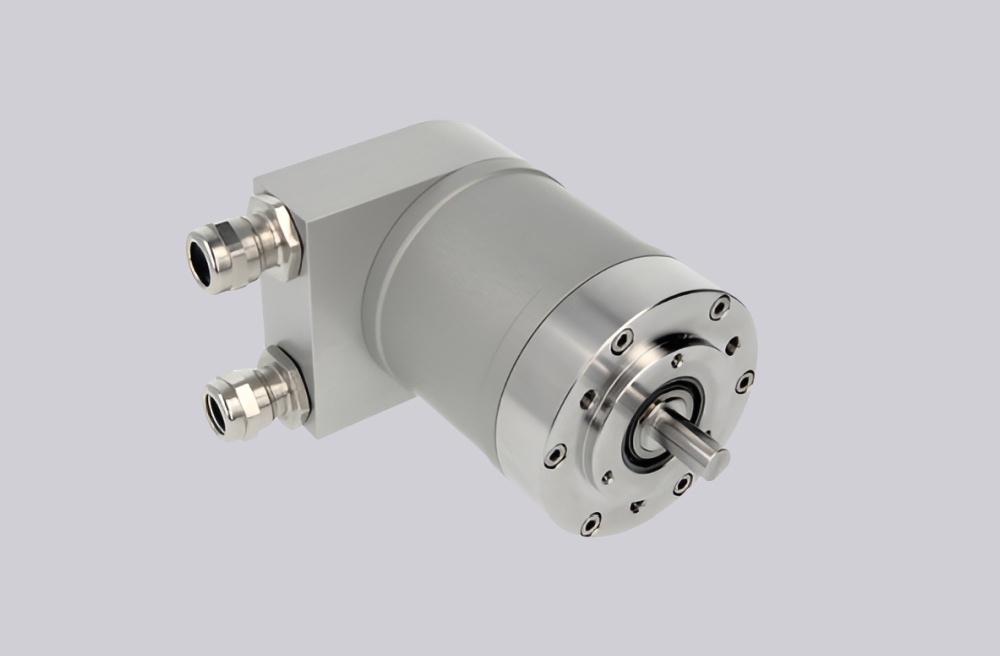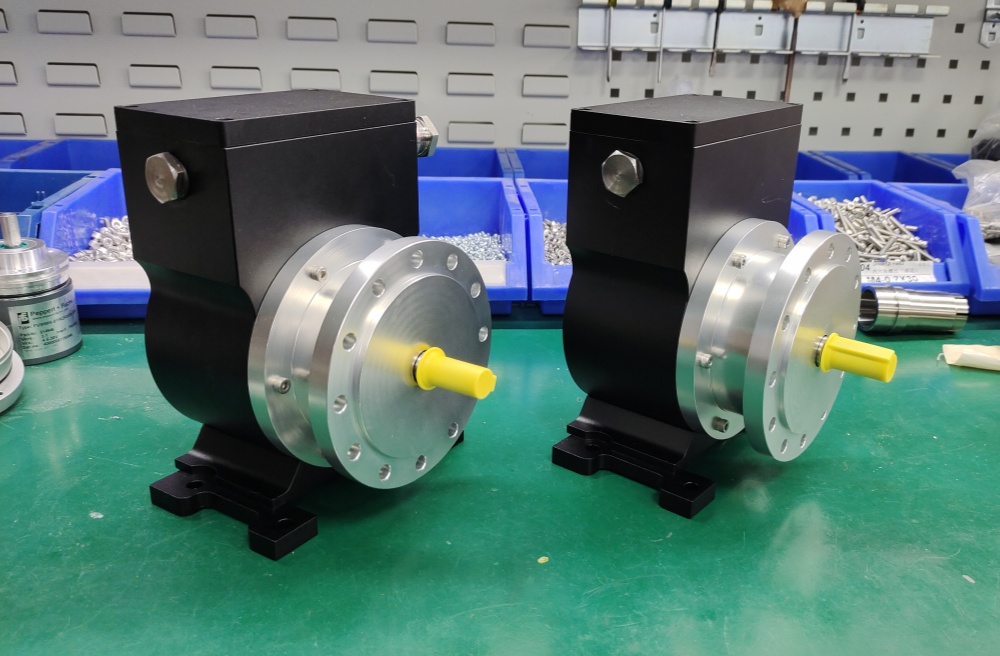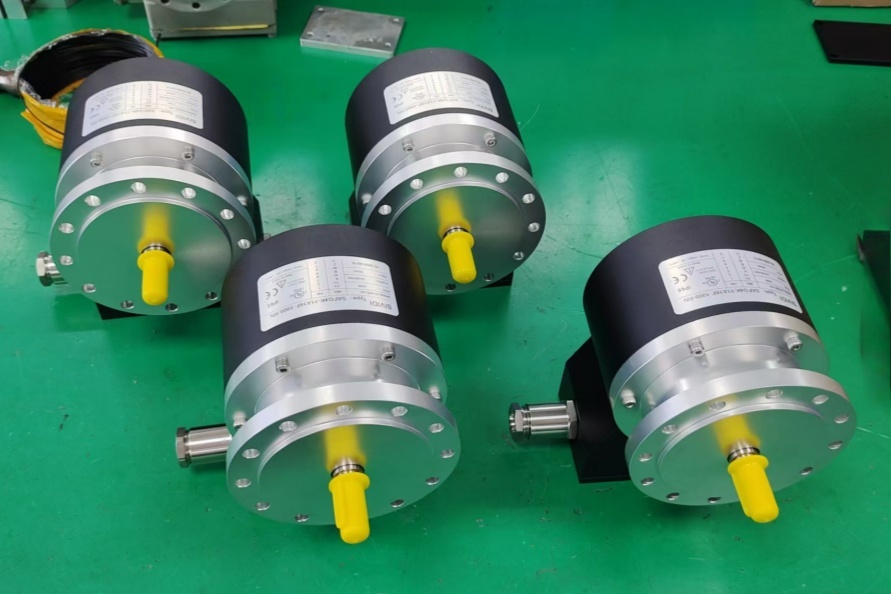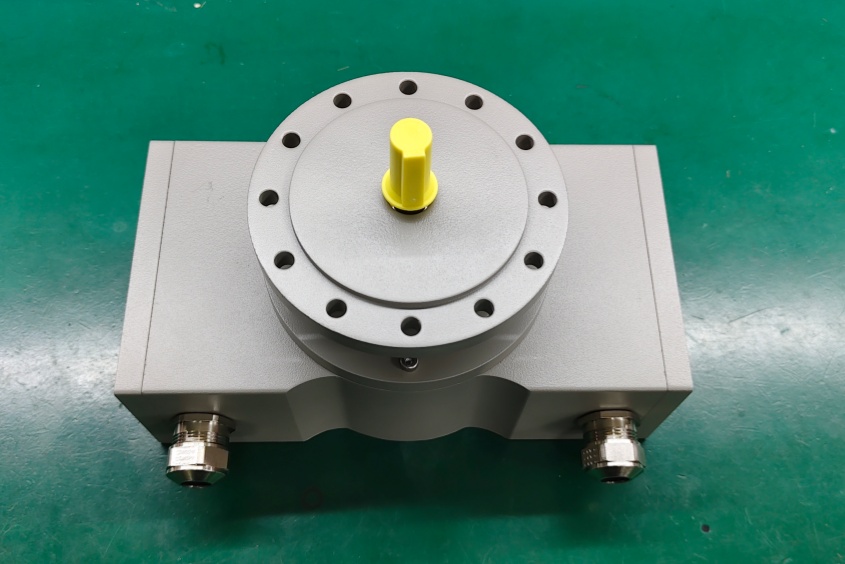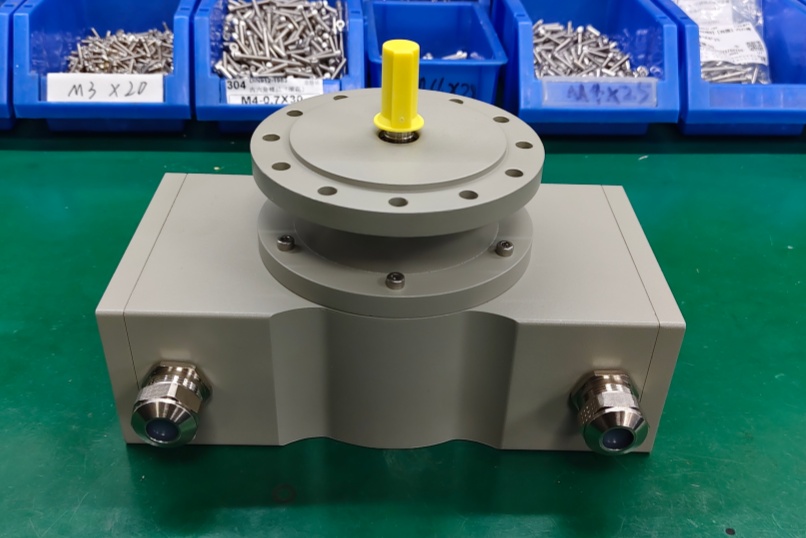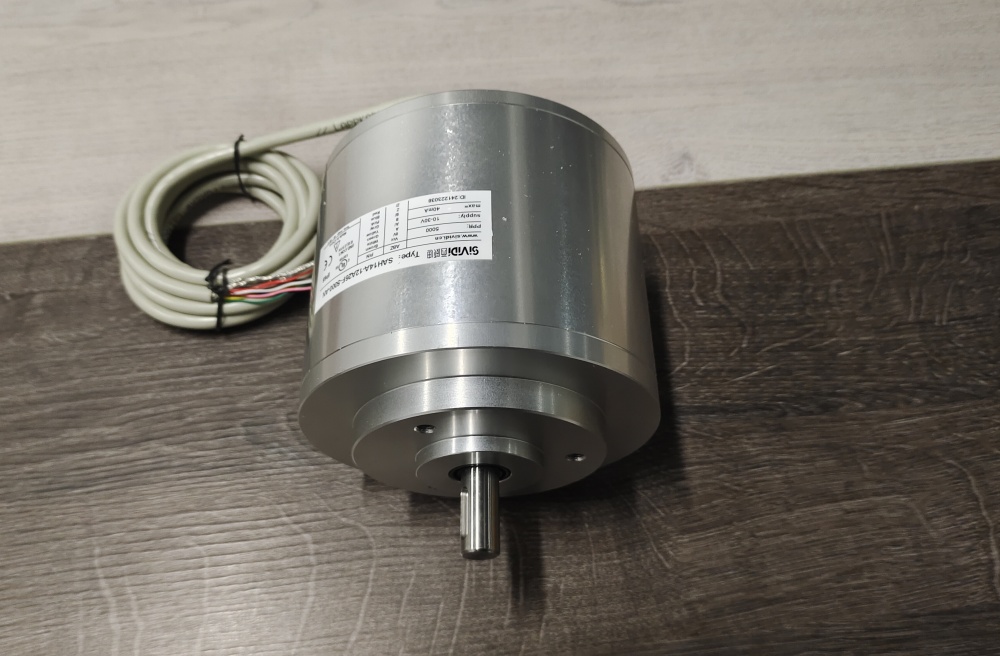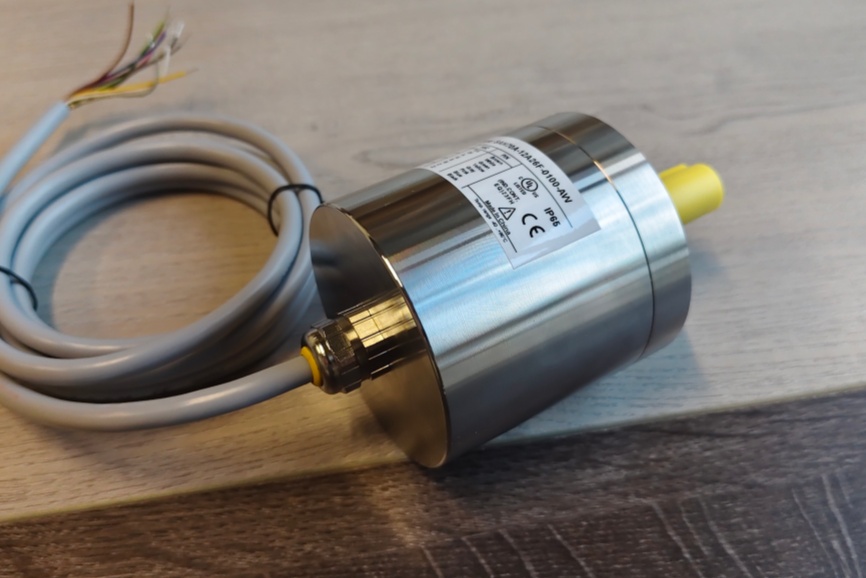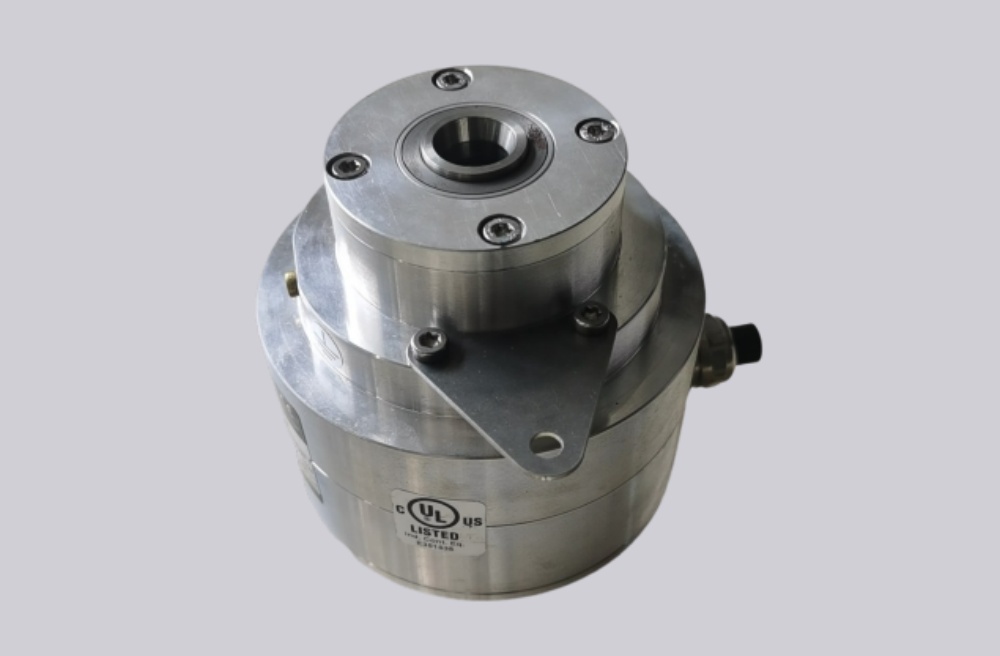




For equipment currently operating with the RVI78N-10CK2A31N-01000 encoder, a custom compatible solution can be engineered to maintain the original machine-side installation and feedback structure. This type of support is especially useful in maintenance, retrofit, and replacement work where the encoder must remain consistent with the existing shaft, flange, and signal arrangement. Under normal production conditions, a suitable solution can typically be delivered within 10–15 working days.
Technical Overview of the RVI78N-10CK2A31N-01000 Encoder
The RVI78N-10CK2A31N-01000 is an incremental rotary encoder built on an optical scanning principle. It converts shaft rotation into electrical pulse signals for speed monitoring and relative position feedback in industrial automation systems. The RVI78 family is designed as a robust industrial platform with a solid shaft, aluminum housing, clamping flange mounting, and short-circuit-proof push-pull output. RVI78N
This configuration provides 1000 pulses per revolution, a resolution often selected where the control system needs more detailed feedback than low-pulse variants while avoiding unnecessary signal density. The order structure indicates 10–30 V push-pull output, A + B + 0 signal format, 2 m cable connection, clamping flange, and 10 mm solid shaft.
Within the RVI78 series, 1000 PPR is a practical choice for conveyors, packaging lines, rotary assemblies, and general motion-control sections where stable incremental information is required without moving into the highest pulse-count range.


Industrial Integration Considerations
For the RVI78N-10CK2A31N-01000, the quality of the mechanical installation has a direct influence on long-term signal stability. Shaft alignment, coupling condition, and flange seating should be checked carefully so that unnecessary radial or axial load is not introduced into the encoder.
On the electrical side, push-pull output makes the encoder easy to interface with many industrial input modules and controllers. Even so, reliable operation still depends on good cable practice. Shielding, grounding, and careful routing away from inverters or switching power devices help preserve clean signal transmission in industrial environments.
The clamping flange arrangement and solid shaft construction support direct installation into machine frames, drive systems, and rotating industrial assemblies where dependable long-term operation is expected.
Custom Compatible Encoder Solution
A custom compatible encoder solution can be engineered for systems currently using the RVI78N-10CK2A31N-01000 configuration. Compatibility work typically includes shaft diameter, flange geometry, cable arrangement, output structure, and pulse count.
This allows the encoder to be integrated into the existing machine layout without major redesign. If needed, additional engineering adjustments can also be included for installation constraints, cable routing conditions, or controller-side signal preferences.
Lead Time and Custom Development
Compatible encoder production for the RVI78N-10CK2A31N-01000 configuration generally requires 10–15 working days. Engineering review before production helps confirm dimensional fit and electrical interface compatibility.
Typical Technical Parameters
| Parameter | Specification |
|---|---|
| Encoder Type | Incremental Rotary Encoder |
| Resolution | 1000 PPR |
| Output Type | Push-pull incremental |
| Signal Format | A + B + 0 |
| Supply Voltage | 10–30 VDC |
| Output Frequency | Up to 100 kHz |
| Shaft Type | 10 mm solid shaft |
| Flange Type | Clamping flange |
| Connection Type | 2 m cable |
| Protection Rating | IP65 |
| Operating Temperature | -20°C to +70°C (glass disk) / -20°C to +60°C (plastic disk) |