



For applications based on the FGH40KK-8192G-90G-NG/20P, a custom compatible encoder solution can be arranged for maintenance planning, retrofit execution, replacement work, and system upgrades. When the installed machine depends on a hollow-shaft encoder with high pulse density and established field wiring logic, a project-specific compatible version can be developed with a standard production lead time of 30 working days.
Technical Overview of the FGH40KK-8192G-90G-NG/20P Encoder
The FGH40KK-8192G-90G-NG/20P is an incremental hollow shaft encoder for rotary motion measurement in industrial feedback systems. The current FGH 40 manual classifies this family as an Incremental Hollow Shaft Encoder, and the electrical data section lists 8192 among the special pulse rates available for square-wave outputs. In this model code, 8192G defines an 8192 ppr configuration, while 90G / NG indicates the quadrature-style signal structure with a reference pulse arrangement. The same manual specifies 12–30 V DC supply, a current-limited, short-circuit proof push-pull line driver with integrated impedance adaptation for 30 to 140 Ω lines, HTL as the standard output level, optional 5 V TTL / RS422-compatible output, and a maximum output frequency of 200 kHz.
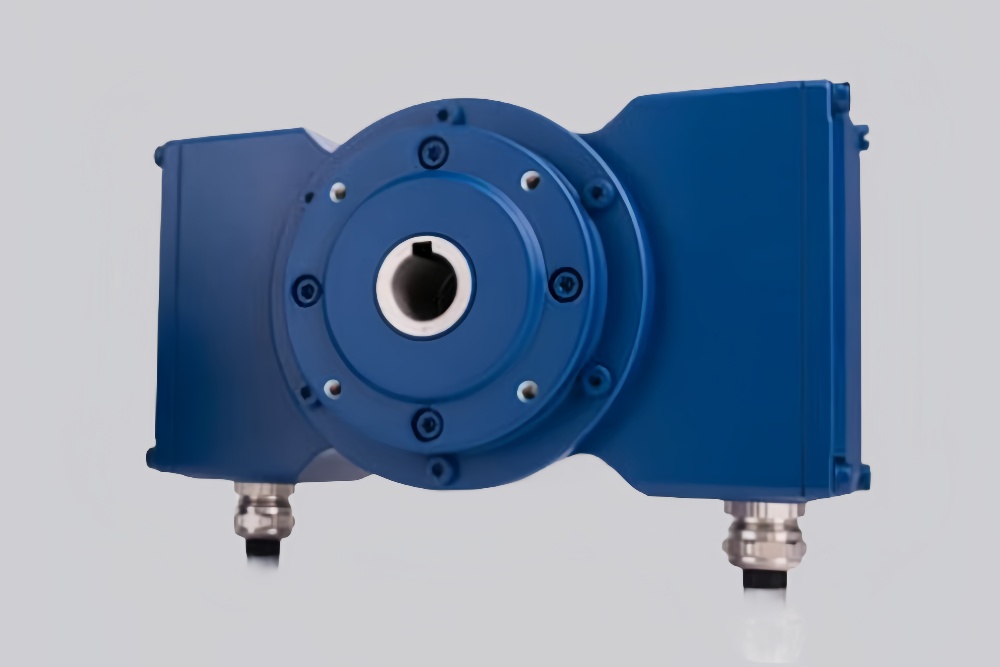
This model differs substantially from lower-pulse FGH40 variants because the manual treats 8192 ppr as part of the special pulse-rate range rather than the standard pulse-rate block. That changes both the signal-tolerance context and the integration focus. For special pulse rates up to 25000, the manual gives a duty cycle tolerance of 1:1 ±5% and a square-wave displacement tolerance of 90° ±5%, which is a meaningful distinction when matching replacement feedback devices to existing evaluation electronics. The FGH 40 manual also distinguishes between versions with one terminal box and two terminal boxes (redundant version), so the KK configuration remains relevant in service planning and field wiring layout.
Industrial Integration Considerations
For this version, controller-side verification is more critical than with standard 1024 or 2000 ppr models. An 8192 ppr output places greater demands on input frequency handling, signal conditioning, shielding quality, and installation discipline across the complete signal path. During retrofit work, the receiving control hardware should be reviewed for pulse-processing capacity, input level compatibility, line characteristics, and reference pulse handling before a compatible solution is finalized.
The FGH 40 manual also provides installation guidance that becomes especially important at higher pulse densities. Proper machine grounding, adequate spacing from inverters, motors, brakes, and contactors, correct cable shielding, and suppression of inductive loads all influence long-term signal stability. Since this series is intended for industrial use and the manual warns against improper installation force, shaft binding, and other conditions that may damage bearings, replacement engineering should treat mechanical fit and EMC practice as one integrated issue rather than two separate checks. fgh40-user-manual-en
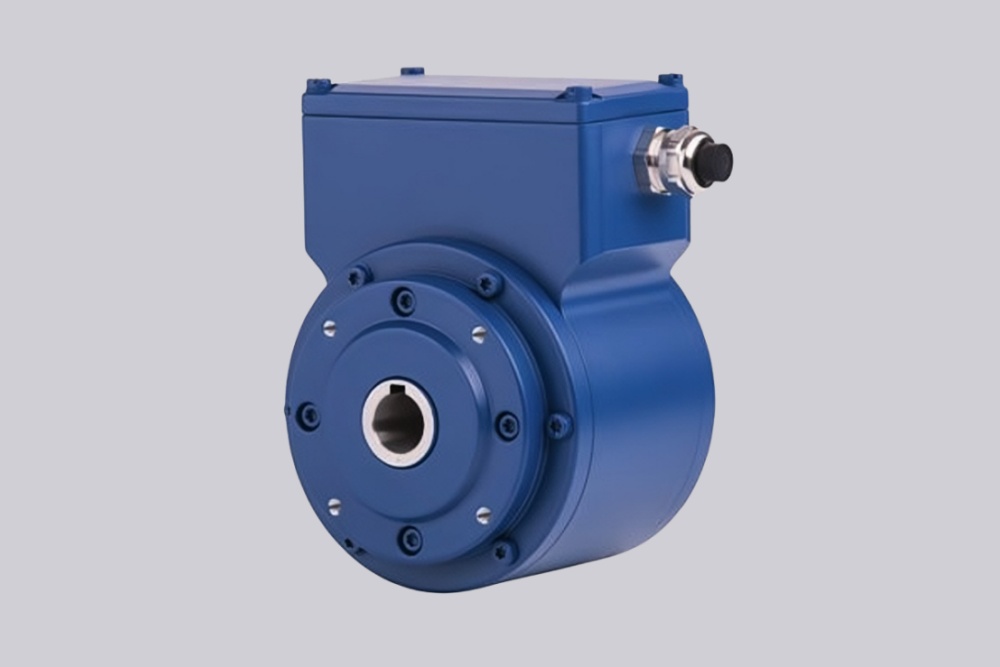
Custom Compatible Encoder Solution
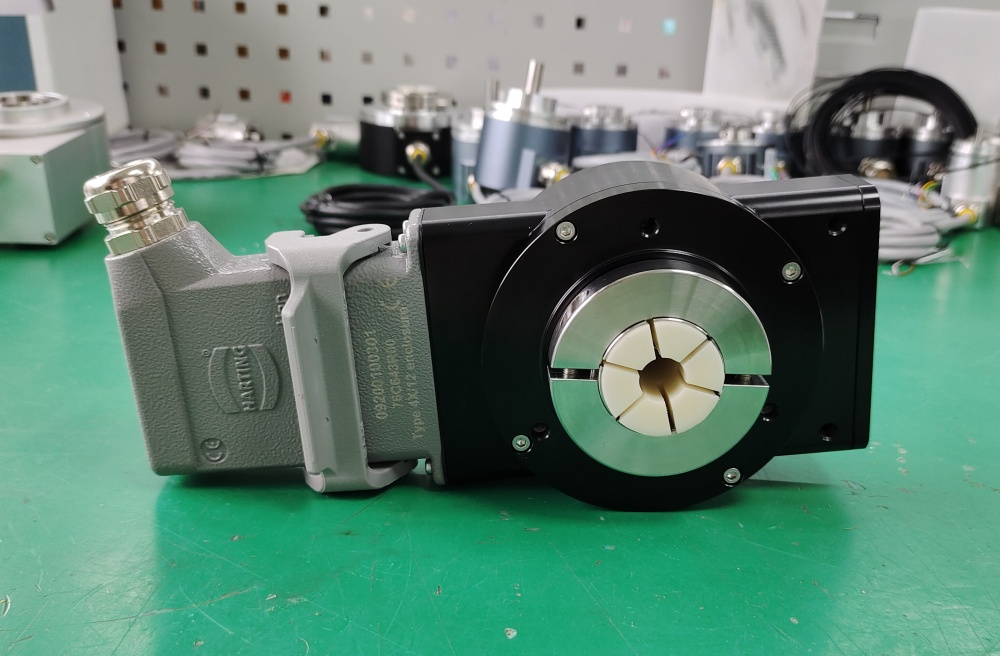
For the FGH40KK-8192G-90G-NG/20P, a custom compatible encoder solution can be engineered to match the original machine interface as closely as possible. The compatible version can be configured around the required 8192 ppr output, hollow-shaft arrangement, output level, signal format, terminal-box concept, and installation logic so that changes to the surrounding system remain limited during replacement or upgrade work.
This type of compatibility-focused solution is particularly valuable where the encoder is already part of a high-resolution feedback chain and where the machine owner wants to preserve the established control structure. In these cases, the main engineering objective is not simply to reproduce shaft dimensions, but to maintain signal behavior, transmission stability, and installation continuity under the actual field conditions.
Lead Time and Custom Development
Typical production lead time: 30 working days.
Before production, the engineering review should confirm the pulse count, output type, supply voltage, signal format, shaft arrangement, terminal-box layout, controller input capability, and field wiring conditions. For an 8192 ppr configuration, shielding method, grounding quality, and line characteristics should be checked in advance so the compatible encoder solution can be aligned with the actual operating environment. The latest manual also states that the FGH 40 family supports IP65 / IP66 depending on configuration, and that sealing conditions affect permissible speed and breakaway torque.
Typical Technical Parameters
| Parameter | Specification |
|---|---|
| Encoder Type | Incremental hollow shaft encoder |
| Resolution | 8192 ppr |
| Output Type | Square-wave incremental output |
| Signal Format | 0° / 90° channels with reference pulse |
| Supply Voltage | 12–30 V DC |
| Output Level | HTL, optional 5 V TTL / RS422-compatible |
| Output Driver | Current-limited, short-circuit proof push-pull line driver |
| Line Adaptation | Integrated impedance adaptation for 30 to 140 Ω lines |
| Max Frequency | 200 kHz |
| Duty Cycle | 1:1 ±5% for special pulse rates up to 25000 pulses |
| Phase Displacement | 90° ±5% for special pulse rates up to 25000 pulses |
| Connection Type | Terminal box configuration |
| Terminal Box Arrangement | KK version |
| Shaft Type | Hollow shaft |
| Shaft Code | /20P |
| Protection Rating | IP65 / IP66 depending on configuration |
| Application Orientation | Maintenance, retrofit, replacement, upgrade |