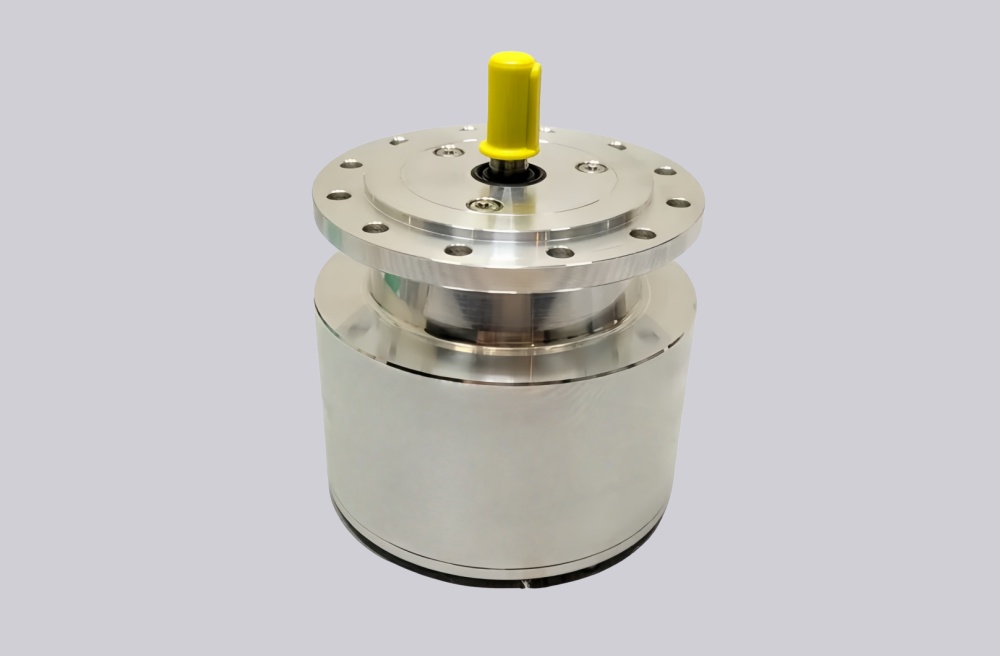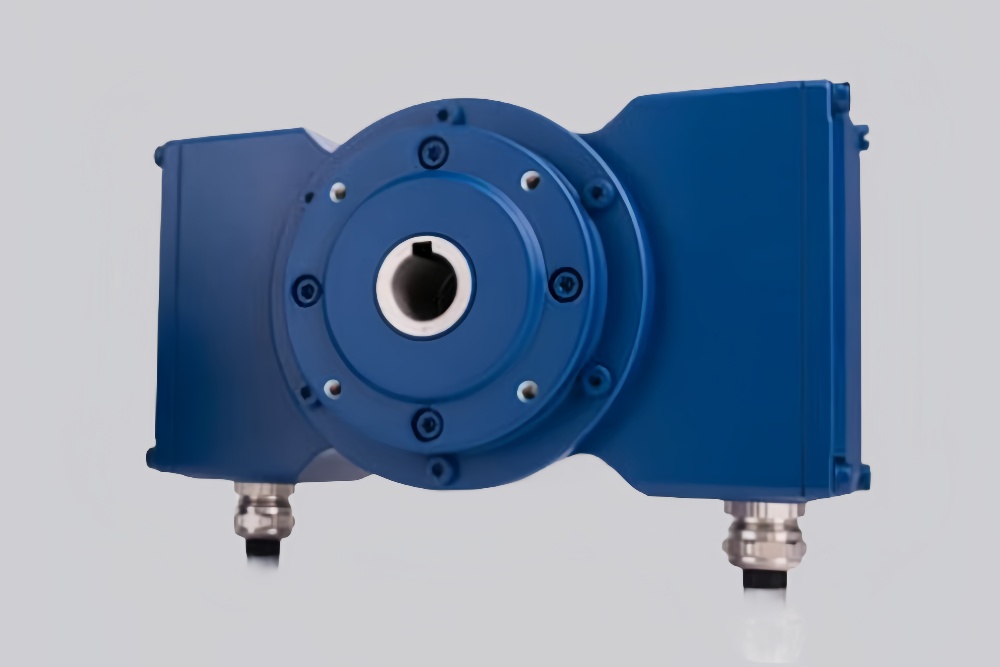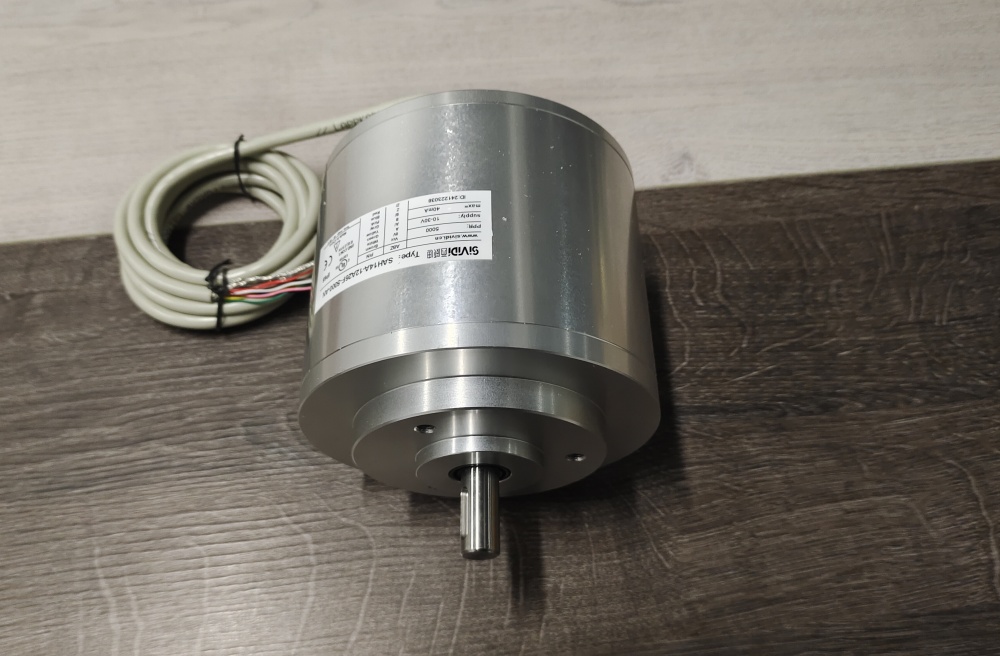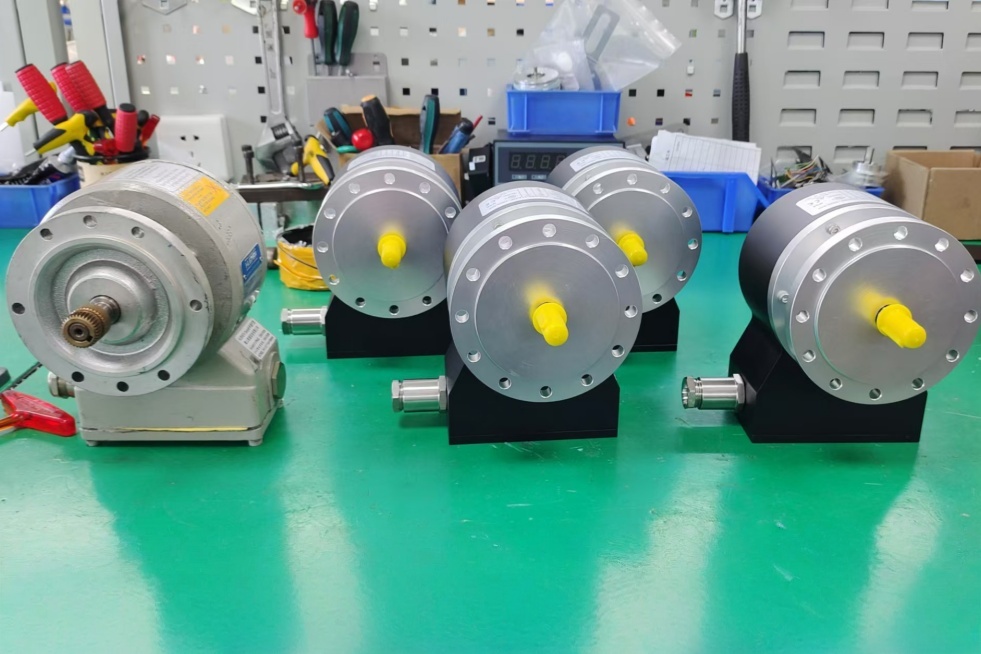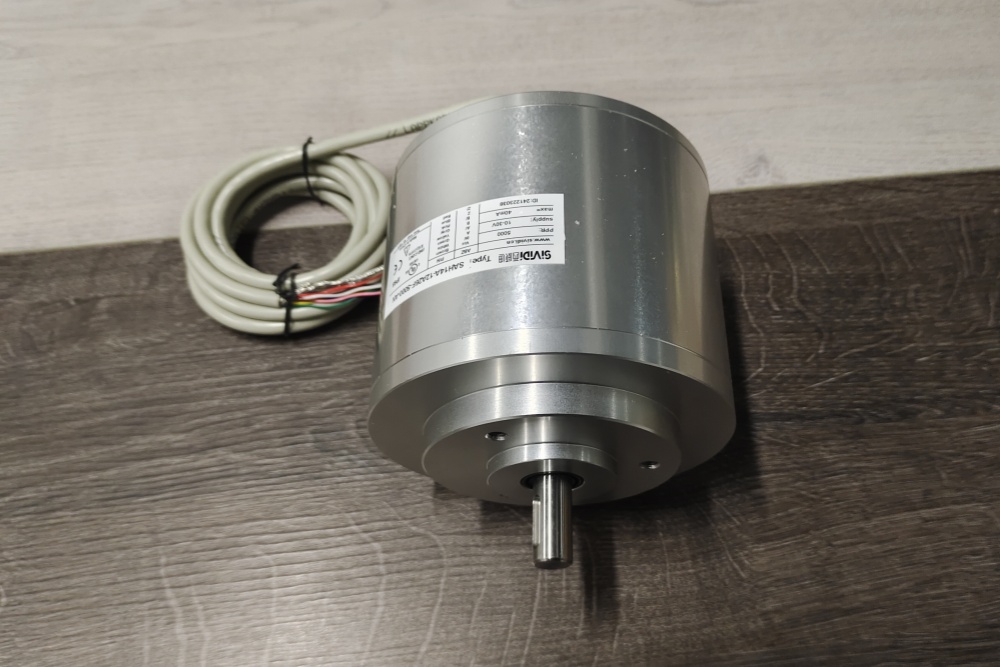




The FGH6KK-2048G-90G-NG-S-J/50P encoder can be covered through a custom compatible solution for retrofit projects, maintenance replacement, and system upgrades where the existing installation concept needs to be preserved. For applications that already rely on a Ø50 hollow-shaft encoder with integrated speed-monitoring functionality, a project-specific compatible version can be developed with a typical production lead time of 30 working days. The latest catalog confirms that this FGH(I) 6 platform supports 12–30 VDC, optional 5 VDC, IP66 protection, and optional overspeed-switch functions.
Technical Overview of the FGH6KK-2048G-90G-NG-S-J/50P Encoder
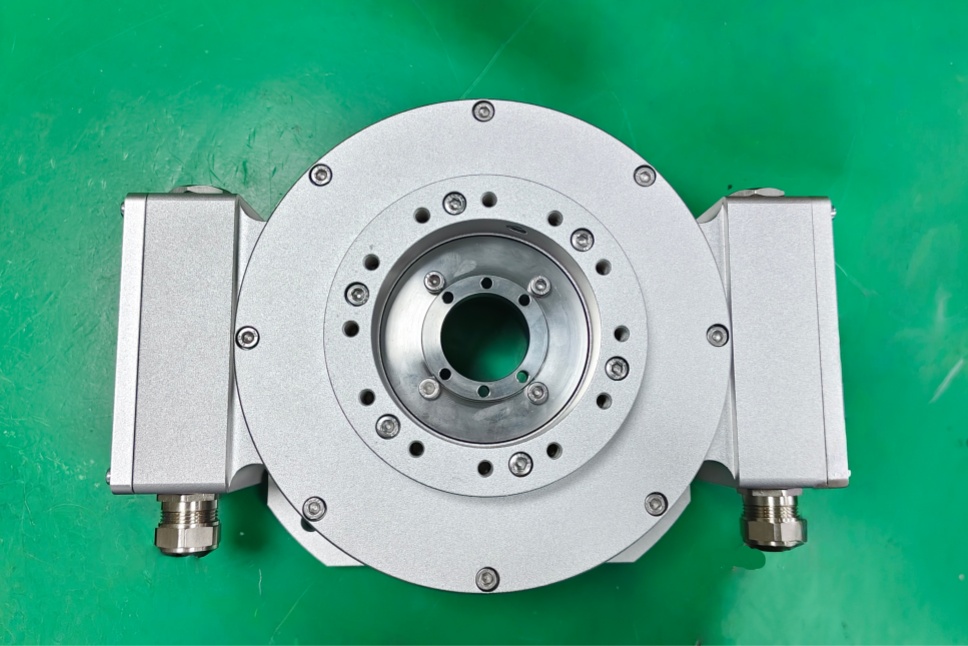
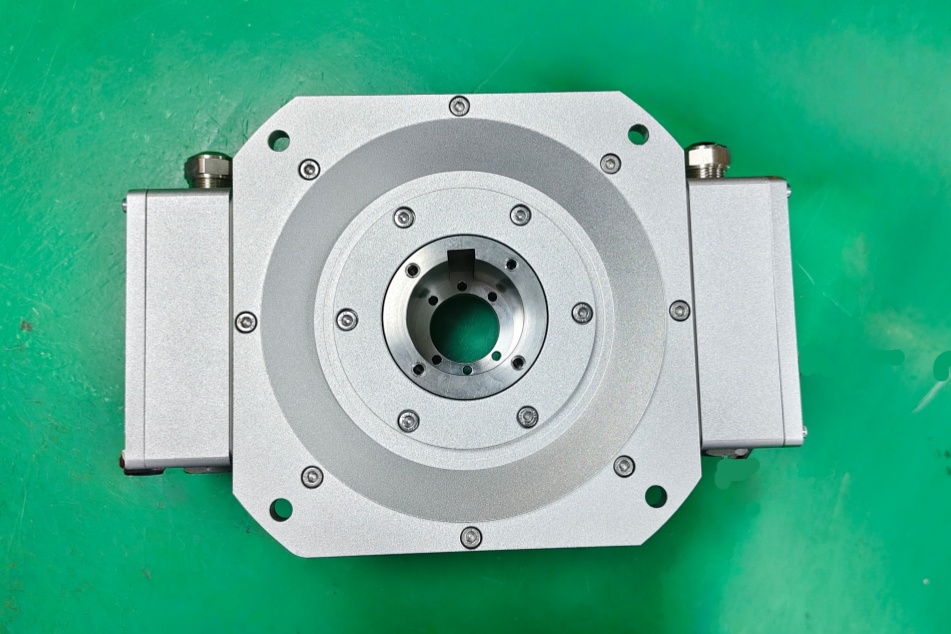
This model is a heavy-duty incremental hollow-shaft encoder from the FGH 6 series. In the type code, KK identifies the version with two terminal boxes, and the catalog states that SK, RK, CK, LK versions use a second terminal box for Option S. The suffix 50P identifies a Ø50 H7 hollow shaft, while 2048G defines the pulse count. The code 90G indicates 90° output signals with inverted channels, and NG specifies a reference pulse with inverted signal. The FGH(I) 6 type coding explicitly includes 2048 among the available square-wave pulse counts.
The same catalog also shows the FGH 6 KK mechanical version as a hollow-shaft design with two terminal boxes and B14 flange for encoder attachment. That combination makes this model distinct from simpler one-box variants, because both the mechanical envelope and the field wiring layout need to be respected when preparing a compatible replacement solution.
Industrial Integration Considerations
For this 2048 ppr version, the most important electrical checkpoint is controller compatibility. A 2048-pulse configuration is often selected because it fits common control and speed-evaluation logic well, but retrofit work still needs to verify counting capability, input level acceptance, shielding practice, and the handling of inverted pulse channels and the reference signal. This is especially relevant where the original system uses the encoder not only for feedback, but also for synchronized speed monitoring across an existing drive section.
The Option S function adds another integration layer. In the FGH(I) 6 technical data, the additional overspeed switch is listed as optional with 2 programmable switches, so the project review should confirm how those switching outputs are used in the installed control logic. During replacement work, it is not enough to match only shaft size and pulse count; the monitoring behavior also has to remain consistent with the original machine sequence.
Mechanically, the Ø50 H7 hollow shaft, B14-related attachment structure, and dual terminal-box layout should all be checked before production release. Bore fit, anti-rotation support, available radial and axial clearance, and service access around the terminal boxes are all relevant in large-drive installations where encoder removal and reinstallation must be predictable.
Custom Compatible Encoder Solution
For the FGH6KK-2048G-90G-NG-S-J/50P, a custom compatible encoder solution can be engineered to match the original mechanical arrangement and operating logic with minimal installation changes. The compatible design can be configured around the Ø50 H7 hollow shaft, 2048 ppr output, dual terminal-box structure, inverted signal format, reference pulse arrangement, and the integrated overspeed-switch function.
This approach is particularly useful where the encoder is part of an established industrial drive train and replacement work must preserve both the feedback channel and the protection-related switching logic. By confirming the coded configuration in advance, the compatible solution can remain aligned with the installed mounting concept and the existing field wiring architecture rather than forcing broader rework on site.
Lead Time and Custom Development
Typical production lead time: 30 working days.
Before production, the engineering review should confirm the hollow-shaft diameter, B14-related mounting arrangement, pulse count, signal format, supply voltage, controller input expectations, and the functional use of the S and J coded options. The switching thresholds, wiring concept, and installation environment should also be checked so the compatible encoder solution can be prepared for the actual machine conditions.
Typical Technical Parameters
| Parameter | Specification |
|---|---|
| Encoder Type | Incremental encoder |
| Resolution | 2048 ppr |
| Output Type | Incremental output with overspeed switch function |
| Signal Format | 90° pulse channel with inverted signals, reference pulse with inverted signal |
| Supply Voltage | 12–30 V DC, optional 5 V DC |
| Connection Type | Terminal box connection |
| Electrical Arrangement | Two terminal boxes |
| Shaft Type | Hollow shaft |
| Shaft Diameter | Ø50 H7 |
| Mounting Feature | B14 flange for encoder attachment |
| Monitoring Function | Additional overspeed switch, optional with 2 programmable switches |
| Protection Rating | Up to IP66 |
| Operating Temperature | -25 °C to +85 °C |
| Option Code | S and J options included |
| Application Orientation | Maintenance, retrofit, replacement, upgrade |