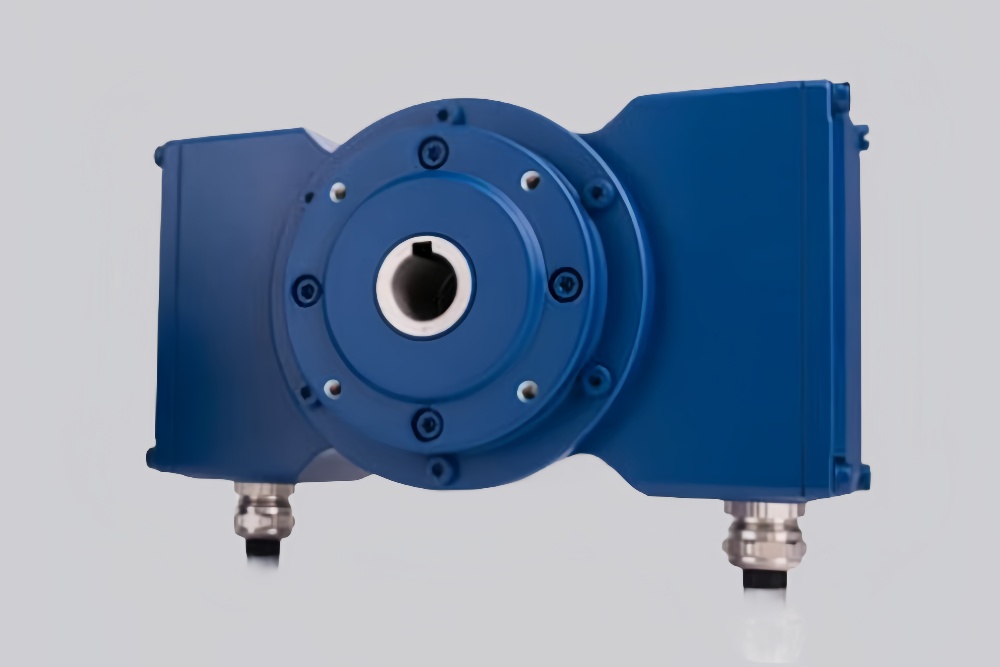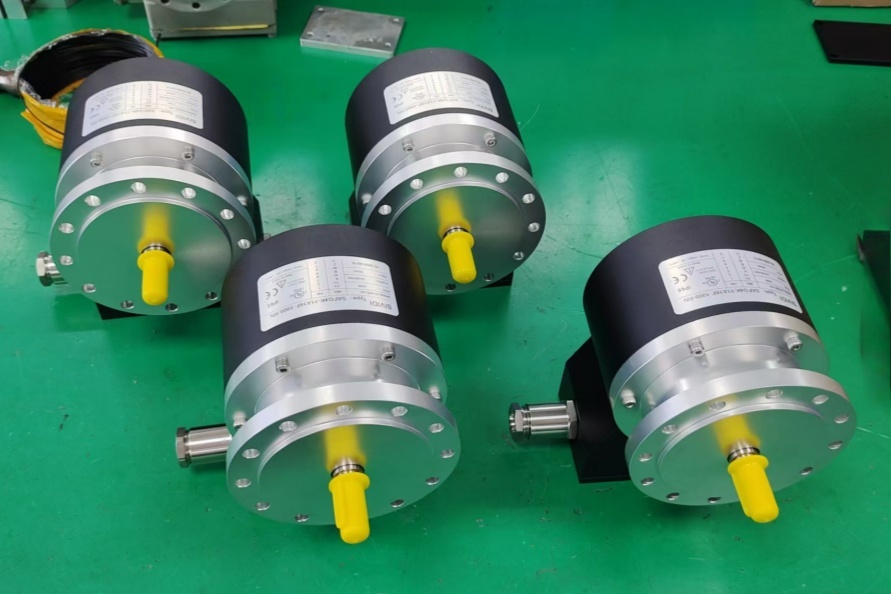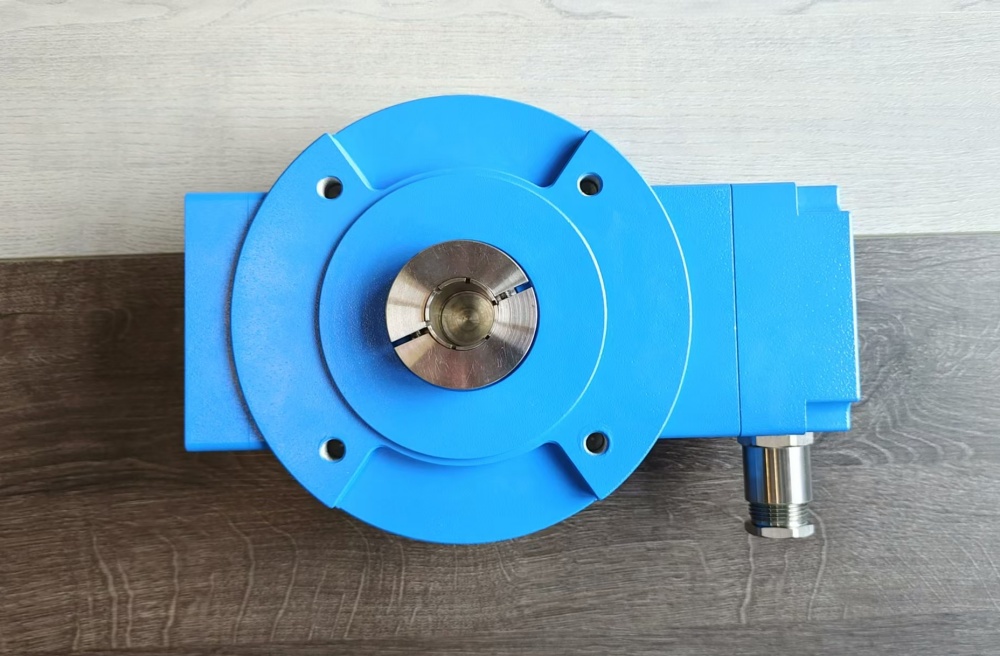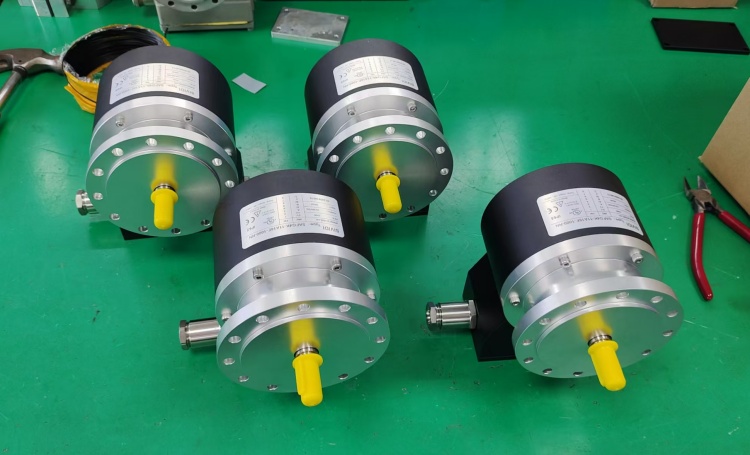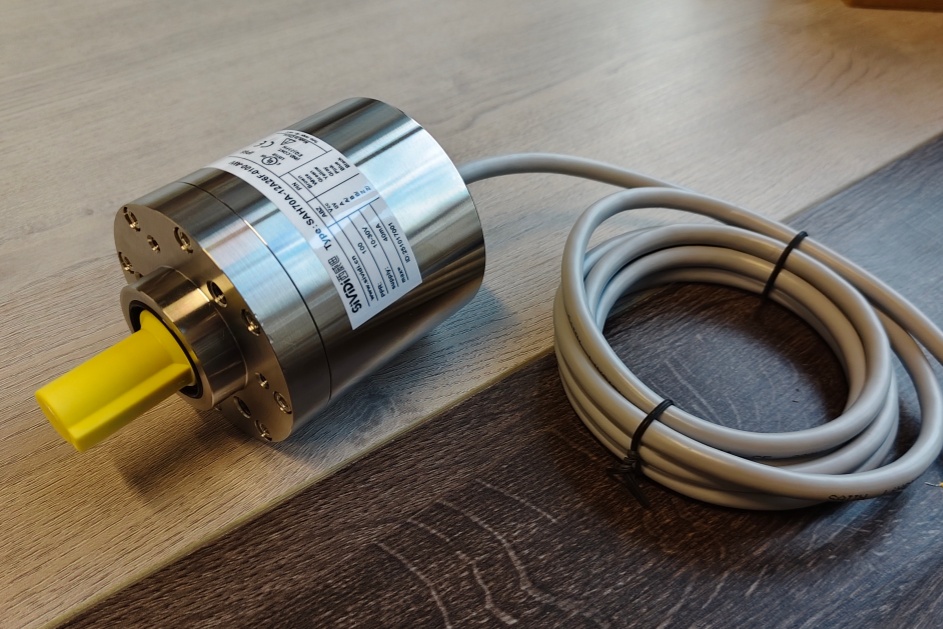




The FG40KK-16384G-90G-NG can be supported through a custom compatible encoder solution for maintenance service, retrofit implementation, replacement work, and system upgrades. For installations that already rely on a high-resolution incremental feedback structure with a two-terminal-box arrangement, a project-specific compatible version can be developed around the original electrical and installation logic, with a standard production lead time of 30 working days.
Technical Overview of the FG40KK-16384G-90G-NG Encoder
The FG40KK-16384G-90G-NG is an incremental encoder for rotary motion measurement in industrial feedback and drive systems. The latest FG 40 manual confirms that the series supports standard pulse rates such as 1024, 1200, 2000, 2048, and 2500, while 16384 belongs to the special pulse-rate range. In this model code, 16384G defines a 16384 ppr configuration, and 90G / NG identifies a square-wave signal structure with 0° and 90° channels, each with inverted signals, plus a mechanically defined reference pulse with inverted signal. The same manual specifies 12–30 V DC supply, a current-limited, short-circuit proof push-pull line driver with integrated impedance adaptation for 30 to 140 Ω lines, standard HTL output, optional 5 V TTL / RS422-compatible output, and a maximum frequency of 200 kHz.
This version differs clearly from the lower-pulse FG40KK models because 16384 ppr sits deep in the special high-resolution range. For special pulse rates up to 25000, the manual gives a duty cycle tolerance of 1:1 ±5% and a square-wave displacement tolerance of 90° ±5%, which is different from the tighter tolerance block used for standard pulse rates. The type-code section also states that KK means 2 terminal boxes, used as a redundant version or together with specific options, so this model should be understood as both a high-resolution and dual-box configuration rather than only a pulse-count variant.
Industrial Integration Considerations
For this model, the main engineering challenge is signal processing at the control side rather than simple dimensional replacement. A 16384 ppr encoder places significantly higher demands on input frequency handling, shielding quality, cable routing discipline, and signal conditioning than moderate-resolution versions. In retrofit projects, the existing controller, counter module, or drive interface should therefore be checked carefully for pulse-processing capability, voltage-level acceptance, and reference-pulse interpretation before the compatible solution is finalized.
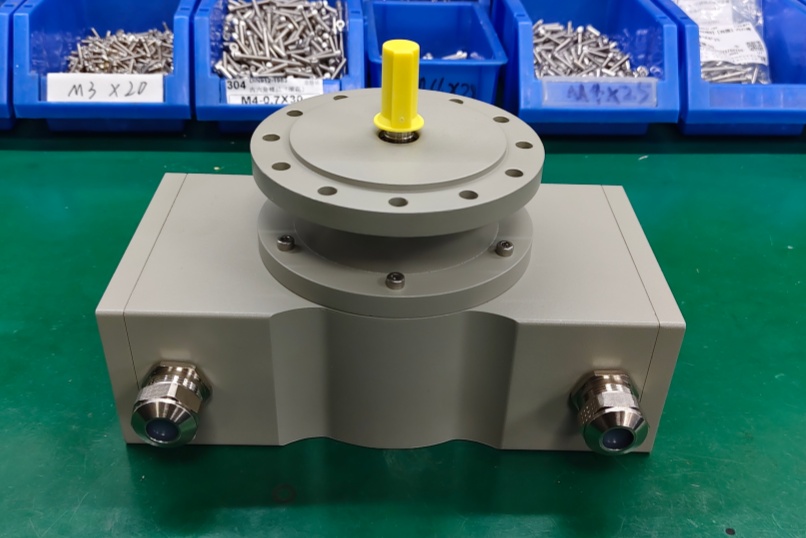
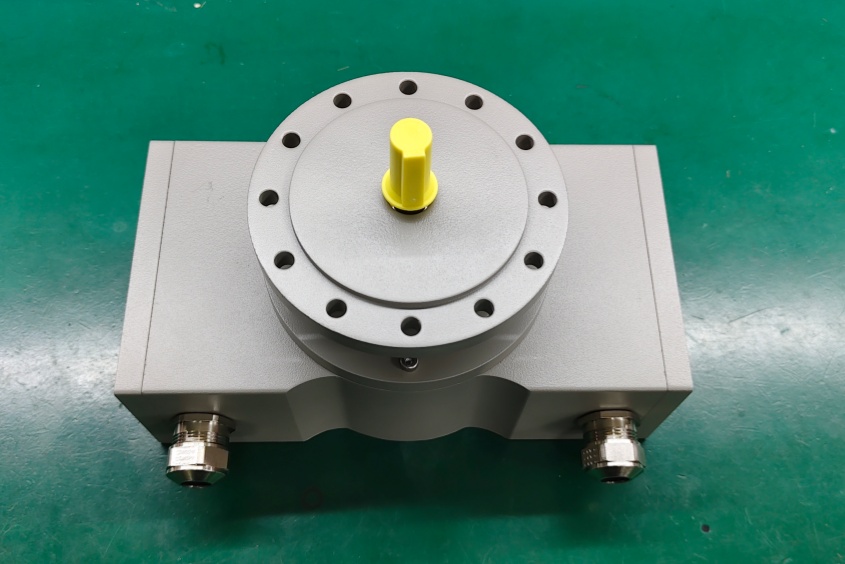
Installation practice is equally important. The FG 40 manual states that installation and commissioning must be carried out by skilled technical staff, and that a hammer or similar tool must not be used because of the risk of damage to the bearings or coupling. It also recommends checking coupling condition, fastening security, and terminal seating during service inspections. For a high-resolution model like this, these points matter because electrical precision can be undermined quickly by poor mechanical installation or unstable field wiring.
Custom Compatible Encoder Solution
For the FG40KK-16384G-90G-NG, a custom compatible encoder solution can be engineered to match the original installation concept as closely as possible. The compatible version can be configured around the required 16384 ppr signal structure, the two-terminal-box arrangement, the defined reference-pulse logic, the required output level, and the existing mechanical installation conditions so that broader modification to the surrounding machine can be avoided.
This type of solution is especially useful where the encoder is already integrated into a high-density feedback chain and where replacement must preserve existing commissioning logic. In those cases, the practical objective is to maintain continuity in signal behavior, wiring layout, and service handling, rather than treating the encoder as a generic incremental device with only a matching shaft size.
Lead Time and Custom Development
Typical production lead time: 30 working days.
Before production, the engineering review should confirm the pulse count, output type, supply voltage, reference-pulse requirement, terminal-box arrangement, installation dimensions, controller input capability, and field wiring conditions. For a 16384 ppr configuration, it is also important to verify shielding method, cable routing, and signal-processing margin in advance so the compatible solution can be aligned with the actual operating environment.
Typical Technical Parameters
| Parameter | Specification |
|---|---|
| Encoder Type | Incremental encoder |
| Resolution | 16384 ppr |
| Output Type | Square-wave incremental output |
| Signal Format | 0° / 90° channels with inverted signals, reference pulse with inverted signal |
| Supply Voltage | 12–30 V DC |
| Output Level | HTL, optional 5 V TTL / RS422-compatible |
| Output Driver | Current-limited, short-circuit proof push-pull line driver |
| Line Adaptation | Integrated impedance adaptation for 30 to 140 Ω lines |
| Max Frequency | 200 kHz |
| Duty Cycle | 1:1 ±5% for special pulse rates up to 25000 pulses |
| Phase Displacement | 90° ±5% for special pulse rates up to 25000 pulses |
| Connection Type | Terminal box connection |
| Terminal Box Arrangement | KK version, 2 terminal boxes |
| Application Orientation | Maintenance, retrofit, replacement, upgrade |